Fear can be our friend, an instinctual response alerting us to threats and dangers to keep us safe. Think about the familiar scenario of running from a tiger in the jungle.
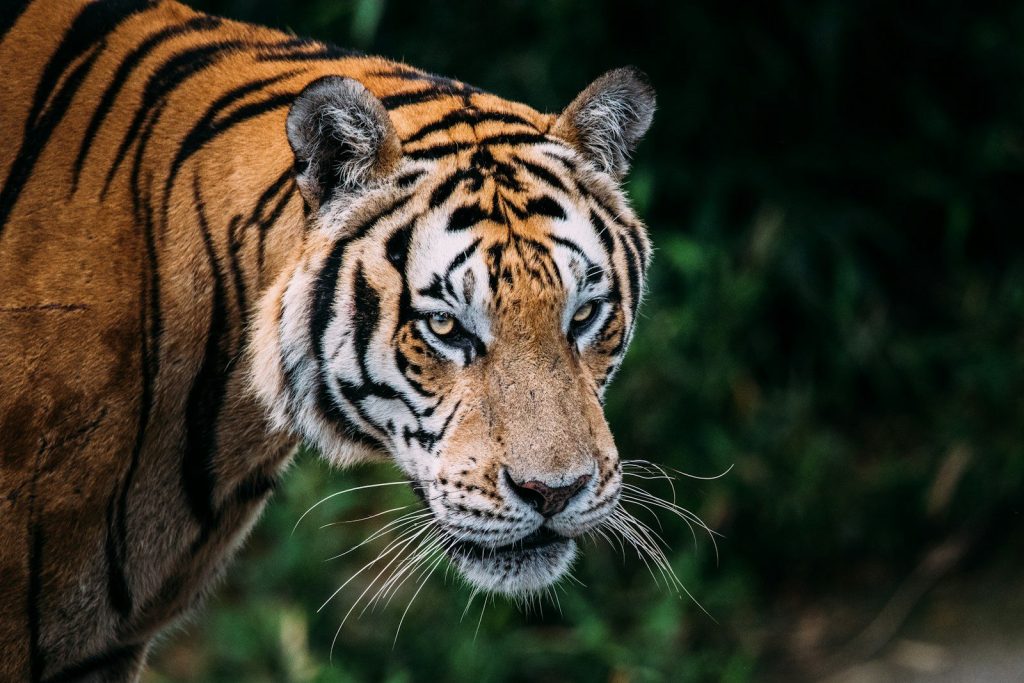
But fear can also keep us from experiencing the world around us, prevent us from ‘growing forward’. Acts that seem simple for others may feel like putting our heads in that tiger’s mouth!
Let’s first talk about what happens in our body when fear creeps, or races, in. When potential danger is observed the brain’s threat detector (the amygdala) automatically kicks in and sends a message to another part of the brain (the hypothalamus) that releases stress hormones (adrenaline and cortisol) causing our heart to race, breath to quicken, and muscles to tense so we can respond quickly to avoid harm. You may be familiar with some or all of these associated responses: ‘fight’-counterattack, ‘flight’-run away, ‘freeze’-stop moving to avoid notice, and ‘fawn’-curry favor with attacker.
We do not want to get rid of these responses that can keep us safe when danger arises. But what gets classified as ‘real’ danger?
Being chased by a tiger? Yes! Seeing an out-of-control car heading your way? Yes! Seeing a child chase after a ball headed toward the street? Yes!
But what about walking into a gathering where you don’t know anyone, feeling like you will be left standing alone in a corner, or are just not good, funny, interesting enough to fit in? Most likely not a real danger. Or simply expressing an opinion contrary to popular belief within a group of friends? Also, most likely not a real danger. But I know from experience the racing heart, shallow breath, and tense muscles such situations can trigger!

My Experiences: I spent most of my childhood in a ‘frozen’ state, not daring to say what I felt or act as I wanted. Fear of making someone mad, looking stupid, or saying the wrong thing kept me from exploring and enjoying the world around me. I believe this was due to both an inborn tendency toward shyness (nature) as well as growing up in a rural setting surrounded by acres of woods with highly restrictive parents (nurture). But as I grew older and another inborn tendency (stubbornness) grew with me, I planned an escape (flight) from parental control and rural isolation. After graduating high school, instead of moving down the road and getting married I took a route off the family map – to college! This may sound like no big deal to many, but obstacles were placed before me to keep me close to home. That stubborn streak came in handy as I found my way to what I thought would be freedom!
If any of this sounds familiar, please stay tuned for the next post. (hit the subscribe button and you’ll get a notice when it arrives)